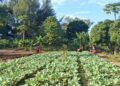












MAPUTO – Mozambique is moving to aggressively bridge its agricultural productivity gap by courting the Thai private sector, aiming to transform its vast unexploited arable land into a rice-producing powerhouse for Southern Africa. Following a high-level bilateral meeting in Maputo, business leaders from the Confederation of Economic Associations of Mozambique (CTA) signaled a strategic shift toward adopting Thailand’s globally recognized rice technology to catalyze local industrial processing and food security.
The potential partnership comes at a critical juncture for Mozambique, which possesses 36 million hectares of arable land and abundant water resources but utilizes only a fraction of its agricultural potential. By integrating Thai expertise in irrigation, mechanization, and high-yield seed varieties, the CTA envisions a future where Mozambique transitions from a net importer to a regional exporter. The scope of the collaboration extends beyond staple grains to include agro-processing of tropical fruits and aquaculture, sectors where Thai technological “know-how” is expected to significantly reduce post-harvest losses.
“Thailand’s experience and technology in this sector are recognised worldwide. Imagine the impact if this experience were applied here in Mozambique. Producing in Mozambique, processing here in Mozambique, locally, and supplying not only our market but the entire southern African region,” said Amâncio Gume, vice-president of the CTA, following the arrival of the Thai trade mission.
The Thai delegation, led by representative Phong Mekthipphachai, has expressed a clear appetite for expansion into the Mozambican market, citing the country’s strategic location and favorable climatic conditions for multiple annual harvests. Mekthipphachai emphasized that the collaboration would focus on efficiency and market access, suggesting that Mozambican products could eventually reach European markets through Thai-supported supply chains. The mission is not merely focused on the exchange of goods but on the deep integration of machinery and industrial systems that create long-term local value.
For Mozambican entrepreneurs, the domestic market offers a guaranteed off-take for investments in renewable energy and floriculture, which are also high on the Thai investment agenda. The CTA is positioning itself as a facilitator to transform these diplomatic discussions into “concrete projects” that can withstand global supply chain volatility. As geopolitical tensions continue to threaten global food prices, the push for localized rice production is being treated as a matter of national economic resilience.
The success of this initiative will depend on the ability of both nations to move from memorandum to implementation, ensuring that smallholder farmers are integrated into the new technological framework. If realized, the infusion of Thai industrial processing technology could finally unlock the “prosperity” that has long remained dormant in Mozambique’s fertile soil, providing a blueprint for South-South cooperation in the agricultural sector.