


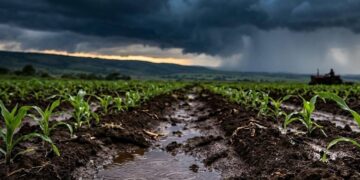

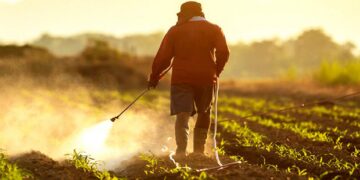



In the sun-baked fields of Mozambique’s southern Maputo province, the unpredictable heartbeat of seasonal rain is no longer the sole arbiter of a harvest. Facing the realities of erratic weather patterns and severe climate volatility, Mozambique’s Ministry of Agriculture is pivoting toward controlled-environment technologies and localized infrastructure specifically greenhouses and high-yield boreholes to anchor a resilient, year-round vegetable economy.
During a recent diplomatic field visit to the Manhiça district, parliamentary delegations from Germany and Luxembourg toured climate-adaptation projects championed by the International Fund for Agricultural Development (IFAD). The initiative offers a clear proof-of-concept: protected cultivation paired with reliable groundwater extraction can effectively de-risk farming for smallholders.
Speaking to visiting lawmakers, Jabula Zibia, Mozambique’s National Director of Agriculture, outlined the imperative for shifting baseline production models.
“We want the majority of farmers to move away from rain-dependent production and instead farm more sustainably, with greater certainty regarding their output. Expanding these solutions requires rehabilitating irrigation systems damaged by floods and scaling up the drilling of boreholes, thereby giving more farmers access to alternative irrigation sources,” Zibia emphasized.
Seeds of Autonomy & Technical Capacity
The broader strategy extends beyond physical structures. To secure long-term agricultural autonomy, the Ministry is collaborating with the national Agricultural Research Institute to pioneer locally produced, high-grade genetic stocks.
“These first-generation seeds are crucial, as they determine the volume of certified seeds that can be produced locally. The restoration of mechanization is another necessary component for boosting productivity,” Zibia noted.
However, state officials emphasize that hardware whether drip lines, tractors, or greenhouse framing is only as effective as the agronomic expertise supporting it. To bridge this gap, Mozambique is doubling down on human capital by expanding its national agricultural extension network.
“Knowledge is the harder part,” Zibia reflected. “That is why our extension services are playing an important role.”
The Power of Targeted Cooperation
For the visiting European delegation, observing these community-scale transformations highlighted the tangible return on targeted international support. By shifting away from top-heavy aid models in favor of direct community investment, local growers gain the momentum needed to scale operations independently.
German MP Johannes Wagner remarked on the catalytic nature of direct aid after observing smallholders in Manhiça managing protected crops.
“With initial support, people are able to make the project grow further and ensure that more people benefit from it. I will do my best to spread the word in Germany and Luxembourg and to advocate for continued support for Mozambique.”
As climate shocks continue to test sub-Saharan food systems, Mozambique’s integrated approach combining modern seed genetics, infrastructure rehabilitation, and extension training provides a scalable blueprint for building rural economic resilience from the ground up.