
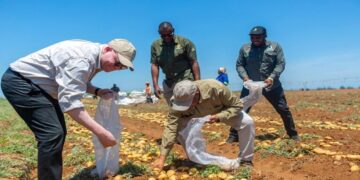
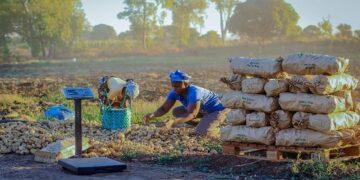















For millions of Mozambicans, the daily grind begins long before sunrise. In bustling open-air markets, along coastal shores, and across rural farmland, vendors, fishermen, carpenters, artisans, and farmers work tirelessly to feed their families and keep the national economy moving. Yet, despite their sweat and tenacity, most operate individually within the informal sector struggling to turn hard work into lasting financial security.
Now, the Mozambican government is launching a sweeping initiative designed to rewrite that narrative. Under the newly unveiled National Cooperative Development Programme (PNDC 2026–2046), Maputo has set an ambitious 20-year target: formalizing 10,000 cooperatives, integrating 1.5 million informal operators into the formal economy, and generating 500,000 new jobs across the nation.
Speaking at the official launch of the PNDC in Maputo, Economy Minister Basílio Muhate laid out the stark reality facing the country’s workforce, where more than eight out of every ten Mozambicans currently rely on informal work.
“Vendors, fishermen, carpenters, artisans and farmers generate income and support families but face difficulties because they operate individually,” Minister Muhate stated. “These are not complaints from people who do not want to work. They are complaints from people who work hard and end up with little.”
At the heart of the PNDC is the strategy to organize these fragmented, small-scale operators into structured cooperatives. By pooling resources, producers will gain the leverage needed to overcome longstanding hurdles, including cumbersome business formalization processes, limited technology, high input costs, lack of financing, and restricted market access.
Beyond simply organizing workers, the program aims to shift Mozambique away from its heavy reliance on raw, unprocessed exports. By encouraging local value addition, rural and district communities can capture and retain a far greater share of their economic output.
“We want cooperatives that peel, dry, preserve and produce goods at district and local level,” Muhate emphasized.
This push for local production comes at a crucial economic juncture. In 2024, Mozambique imported approximately $8.4 billion in goods against $8.2 billion in exports. By building up domestic processing and manufacturing capabilities through cooperatives, the government hopes to substitute expensive imports with locally made goods, keeping capital circulating within the domestic economy.
To ensure these new cooperatives find ready buyers, the government is embedding structural market guarantees into the program. A key highlight is a mandate allocating a minimum quota of 15 percent of public procurement for food products and services to the cooperative sector. Additionally, the plan outlines the creation of district-level trading exchanges, digital marketing platforms, local trade fairs, and direct supply agreements with major supermarket chains and commercial traders.
Underpinning these economic measures is a sweeping legislative reform. The government plans to approve regulations implementing the General Cooperatives Law this year, establish a dedicated National Office for Modern Cooperatives, and draft a tailored tax-benefit framework to incentivize formalization.
Realizing this 20-year vision, however, will require shared accountability from both international allies and the cooperatives themselves. Minister Muhate called on development partners to align their funding through predictable, long-term financing, credit guarantee mechanisms, and targeted capacity-building. At the same time, he issued a clear standard for the newly formed groups: success will ultimately depend on transparent management, meticulous record-keeping, regular assemblies, and reliable commitments to buyers.